Kitsap Creative · Issue 01 · Interview
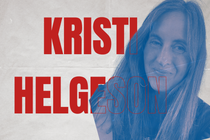
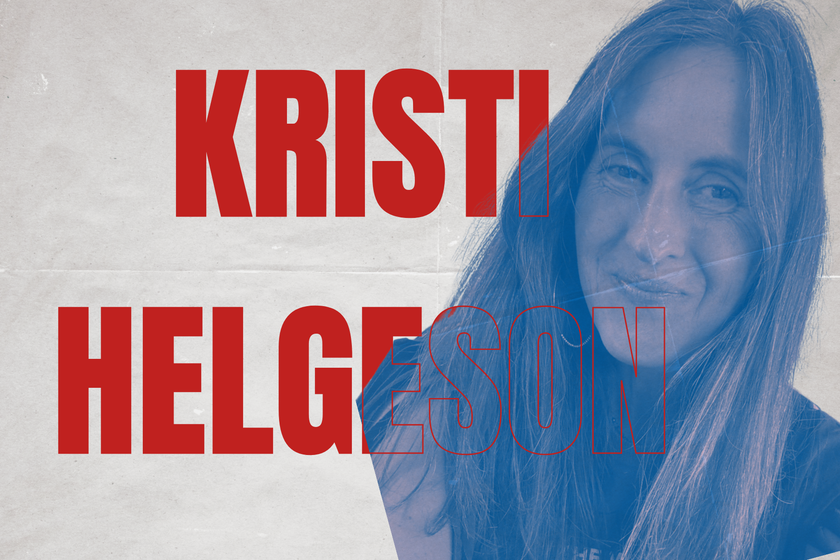
Kristi Helgeson advocated for a death row inmate, negotiated deals at Adobe, and coached neurodivergent kids, all in a span of over 20 years. Then she got an MFA and became a poet. We talked about Liberty Bay at 2am, ekphrastic poetry, and her creative process.
After a non-linear career as a lawyer, nonprofit exec, media producer, and education consultant, Kristi got an MFA and became a writer. Her debut poetry collection, Cosmic Crisp, is under submission. We talked about writing in and about Kitsap, a poem about Lorca and preferring to be alone, and the moment of friction when a poem becomes inevitable.
You advocated for a death row inmate in Alabama. You negotiated deals for Adobe. You created a web series for kids with learning differences and transitioned to coaching them. Then you got an MFA and became a poet. That's not a career arc — that's a life that keeps answering a different question. What were you looking for across all of it?
I was (and am) looking for a life that felt textured and perhaps a bit unruly. I stepped into these high-contrast worlds—death row, corporate dealmaking, the digital studio, neurodivergent education—not as part of a strategy, but by following an intuitive pull. Looking back now, I can see that across all of it, I was drawn to meeting language at the point it collapses, to see what survives or can be created when tidy explanations fail, and to ask and imagine what might happen next. As a poet, I'm looking for that moment of friction when a poem becomes inevitable and demands to be seen.
"I was drawn to meeting language at the point it collapses."
Working the Liberty Bay Cafe Closing Shift is set right here — Poulsbo, Liberty Bay, 2am, the bar's closed, synanthropic wildlife in the parking lot. That poem holds tourists, a returned steak, and people struggling with addiction and disordered eating in the same frame. How did it come to exist? Were you working that shift, or did you carry someone else's night home?
I was eating dinner at The Loft, perched above the Brass Kraken, watching the sunset fracture on the water. So I wasn't working that shift, but my hands remembered restaurant work as I watched the servers wiping tables. News at the time was heavy: an elementary teacher had died of a fentanyl overdose, social media was like a surreal gallery of pills, and I was preparing to send my kids off to college, with Narcan. Combine that with the Poulsbo woman whose property was raided by 100+ raccoons, and you get this collision of themes: the Anthropocene, wealth, public performance, isolation. Stepping into the voice of an imagined narrator, I found a lens to process and express all of it.
That poem doesn't editorialize. It just stays in the room. Poetry that holds class and addiction without arguing about them is hard to pull off. What's your instinct about when a poem should make a point and when it should just show up and pay attention?
I don't usually set out to make a point. Instead, my poems typically arrive from a moment of witnessing—looking very closely at something, real or imagined, until it insists on being expressed in a particular way. I wrote a very short poem about Ruth Bader Ginsberg's iconic hairstyle. That poem is about how women perform to expectations. But its meaning was revealed only after I interrogated that silhouette and noticed larger possibilities hidden within it. Your question makes me realize that when I'm turning a poem into song lyrics—as I also did with the RBG poem—there's something about building a chorus and bridge that creates a different kind of narrative intention. But in most of my poetry, meaning-making feels more organic, intuitive, even a bit mysterious at times. The "point" shouldn't feel forced, but is what happens in the subtext when I pay attention and hold my gaze.
"The 'point' shouldn't feel forced. It's what happens in the subtext when I pay attention and hold my gaze."
Autoplay ends with "Oh, Great Box of Blue Light, say / Stay." You ran Dyslexiaville and the Super d! Show — you've spent years thinking about how screens and technology shape young minds. Is that poem a confession, a warning, or both?
It's definitely both. The poem arrived after an evening walk in Port Madison on Bainbridge Island. A massive TV lit up a living room like a flickering shrine, sparking thoughts about our complicity with technology. It lulls us, thinks for us, purports to connect us, yet often leaves us feeling even more isolated. But I'm no Luddite. I love technology and the possibilities it offers; I've used it to teach 2e kids friendlier ways to read and write. And there's such playfulness in using multimedia to create and share stories. For me, it's about negotiating technology as a tool for joyful co-creation rather than a substitute for human presence. That makes me think of Kazuo Ishiguro's Klara and the Sun and what happens when we start to love what we build to mirror ourselves.
You wrote three ekphrastic poems for the Bainbridge Island Poet Laureate Program — responding to Peggy Vanbianchi's gut-and-found-object sculpture, Sheila Ross's painting, Jenny Anderson's clay pilgrim. What happens when you write toward someone else's art? Does the visual piece give you permission, or does it create a different pressure?
It creates a permissive pressure, an invitation I'm happily compelled to answer. I'm a constant seeker of art—theatre, music, film, visual art—frequenting island venues from BIMA and BPA to the Lynwood Theatre, Side Quest Stage, Island Theatre. I'm often in Seattle at The Showbox or Sunset Tavern, and I read deeply in fiction and poetry. Those encounters compel me to translate that art with a new vocabulary. Right now, I'm deconstructing Death Cab for Cutie lyrics, reducing them to a raw lexicon of nouns and verbs, then reassembling the fragments into new poems with my own imprint. My first full-length collection, Cosmic Crisp (under submission, and I can't wait to share it!), includes poems in conversation with art as disparate as architect Philip Johnson's The Glass House and the saturated, uneasy imagery of William Eggleston's The Red Ceiling.
The Lorca poem is essentially about preferring to be alone. "Beholden to nothing and no one / (not you, not teens) / except Tito and the Spanish sun." How much of your poetry is permission — permission to want what you actually want?
For me, poetry occupies a space of creative autonomy where permission is not only unnecessary, it's anathema. Sometimes that means I use poetry to examine the essence of a particular emotional experience of my own, as with the Lorca poem, which was written as a kind of pandemic wishcraft. Yet even when I'm writing from a lived moment, as a poet I strive to tell it slant. I also create and collaborate with personae who wrestle for agency as their interior lives collide with societal expectations. I find it so satisfying to excavate the sub-basements of an imagined interior, as well as my own. (Literally speaking, Cosmic Crisp includes pieces on secret vaults and basements!) My poetry often seeks to illuminate atypical perspectives society usually buries: those unconventional or unconsidered voices that quietly sidestep the gatekeepers of permission. In that way, the writing itself becomes an act of subversion.
"Poetry occupies a space of creative autonomy where permission is not only unnecessary, it's anathema."
You grew up in farming country, eastern Washington. Then decades in Seattle. Now Bainbridge. What do you carry from that first landscape?
Abandoned cemetery: lingering among pines with a notebook.
Pack of kids: kick-the-can, bicycles, TP'ing teachers' homes.
Wheat fields: vanishing in, sledding on.
Cumin and frying onions: the scent said Go home for dinner.
Cigarette fog in a bowling alley, Wednesday nights: digital glow of PacMan.
Blue shag carpet and turntable: Bowie's Low.
Catholic church, a single pew: our family of eight, kneeling.
You've spent nearly 20 years working with neurodivergent and twice-exceptional kids — you started support groups, served on the Dyslexic Advantage board, built media for kids who learn differently, coached them 1:1. Does that work inform how you write? Do poets and kids who think sideways have something in common?
Neurodivergent and 2e kids are some of the most creative, fiercely authentic people I know. They inspire me to write from a place of alignment and vulnerability—to turn up the imaginational and emotional volume to 10. My work with them also led to the architecture for Cosmic Crisp, which reflects the personal development theories of Kazimierz Dąbrowski, who identified "overexcitabilities" in high IQ children. Many of these kids can stumble over the rigidity of academic writing but thrive within the freedom of poetry. For them, as for me, poetry transforms writing into a playful process of searching for precise words and resonance within the silence. This kind of play is a powerful antidote to writerly inertia. And it's a "sideways" look at the world I admire in writers like Maira Kalman and Mary Ruefle.
You got your MFA from Eastern Oregon University. What did the degree give you that you couldn't have gotten on your own, and what did it teach you that school can't actually teach?
Structure, dedicated time, and relationships with interesting, talented people. It was a close-knit program, so my instructors knew me well enough to see exactly who I should be reading—Lydia Davis, Claudia Rankine—to make breakthroughs in my work. It accelerated my growth in ways I wouldn't have managed alone. My MFA experience also taught me that creative friction is totally normal once you heighten the risk. I became more comfortable with trusting my creative intuition, tempering my instincts as an artist.
You managed a horse ranch solo with zero experience. You circumnavigated the globe on 19 flight segments. You keep walking into things you have no business doing. Is that a writing instinct or a life instinct?
It's a life instinct that transmuted into an appetite for creative risk. I was lucky to be raised by parents who delighted in my antics and, despite modest means, led me to believe I could do or become anything I wanted. Perhaps I took that a bit too literally! There is something exhilarating about jumping into the surf, flailing around in the waves, getting salt up your nose, then suddenly noticing you're swimming. And that's usually when I decide it's time to get out of the water and try to build a sand castle out of jello.
What are you working on right now? Where is the writing taking you?
Maybe it's spring or a sense of catharsis, but I'm currently returning to surrealism and radical play. I'm revising a second collection of poems—a collaboration with a collage artist whose work recently intersected with my subconscious. She made an image using a 1950s Life Magazine domestic scene that mirrored one of my dreams. In another, men resembling Matrix agents seemed peeved that I was humming a melody, though I assured them I could be trusted. I've paired that tune with a new poem, and the collection is now stretching into a multimedia project. Multi-hyphenates like Miranda July and David Byrne are helping me imagine what's possible. Next up, a residency in the Idaho panhandle will host my current obsession: fabulist fragments narrated by both human and non-human characters vying for a voice. Think surreal, eco-feminist, absurdist, cozy horror. In the spirit of Kelly Link, I'm ready for my imagination to "get in trouble."
"Think surreal, eco-feminist, absurdist, cozy horror."
What does it mean to you to be writing on this island, in this particular community, right now?
This island is a thriving ecosystem, dense with makers, and vital to my growth as an artist. During long, daily walks in our forests and along our tidelines, my mind wanders and ideas begin to congeal as words, sounds, images—the raw materials of a poem. Within this shared space, we trade the early seeds of our work, cross-polinate, co-create, and attune our instincts. I know what we have here is rare, and I don't take it for granted. Within the poetry community specifically, I want to express gratitude to the Bainbridge Island Poet Laureate Program and to my creative family (you know who you are). As an emerging, experimental artist, it has been invaluable to be buoyed by peers who are as rigorous as they are generous.
Is there anything we haven't asked that you'd like to talk about? The floor is yours.
With deep gratitude, thank you, Kitsap Creative, for this interview. It's been delightful to grapple with these provocative questions, reflect on my process, the work of being a poet, and who I am becoming as an artist.
For readers looking for poetry in the wild, I recommend the third Thursday readings/open mic at Bainbridge Public Library, hosted by the BI Poet Laureate Program (join their email list for the best updates). Just beyond the bridge, Centrum in Port Townsend offers Poetry on The Salish Sea year-round and its Writer's Conference in July. Oh, and I have new poems forthcoming later this spring — as print and performance — in Parley Lit.
Let's keep the conversation going—find me on Instagram @kseattle.
Elsewhere
Kristi Helgeson is a poet based on Bainbridge Island. She holds an MFA from Eastern Oregon University. Her debut collection, Cosmic Crisp, is under submission.
- Instagram: @kseattle
- Bainbridge Island Poet Laureate Program
Want the next one in your inbox?
Subscribe. New conversations from Kitsap creatives.